Eyelid surgery · Buenos Aires
Blepharoplasty
in Buenos Aires
Blepharoplasty corrects excess skin, muscle and fat in the upper and lower eyelids to restore a rested, natural look. The technique and the recovery are defined according to each patient's anatomy; results vary by patient and cannot be guaranteed.
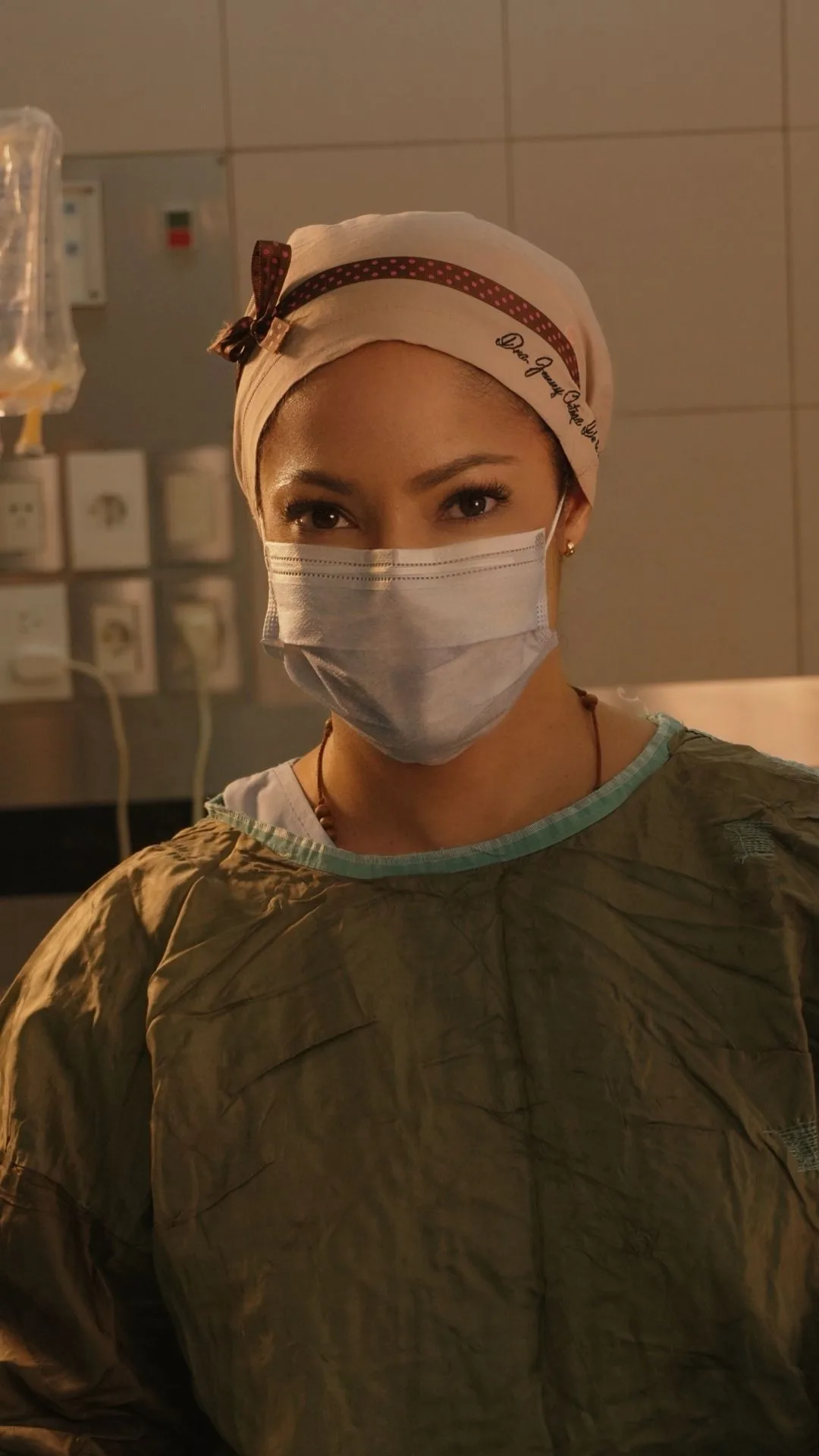
Dr. Jenny Ortega De La Rosa Plastic SurgeonM.N. 146.616Titular Member of the SCPBA
Results vary by patient and cannot be guaranteed. The indication and scope of any procedure are defined only after an individual medical assessment.
- 1–2 hoursDuration
- Local + sedationAnaesthesia
- 10–14 daysPresentable
- Days 5–7Suture removal
- 2–3 monthsFinal result
Timings are indicative. Every recovery is individual and is adjusted at each check-up.
It all starts with a consultation
At the consultation we assess your eyelid anatomy, review the frontal and profile views and determine whether one or both pairs of eyelids should be operated on.
Every surgery begins with a personalised assessment consultation.The surgery
It does not change the shape of the eye.
It removes what makes it look tired.
Blepharoplasty — also called eyelid surgery — removes excess skin, muscle and fat from the upper and lower eyelids. Its goal is to correct the appearance of tiredness or ageing in the look without altering the features or expression of the face.
In the upper eyelid, skin redundancy creates a fold that falls over the lash line, giving a heavy and sleepy appearance that does not disappear even after a good night's sleep.
In the lower eyelids, bags and structural dark circles originate in the herniation of orbital fat through a weakened septum. Lower blepharoplasty repositions or resects that fat, tightens the orbicularis muscle and removes the excess skin. When both pairs of eyelids show changes, they can be addressed in the same procedure; the scope and the recovery are assessed individually.
Is it for you?
It is not defined by age.
It is defined by what the eyelid shows.
Blepharoplasty is indicated when eyelid changes represent an aesthetic or functional concern for the patient. Each case is assessed individually at the consultation.
Signs that surgery helps
- Excess skin on the upper eyelidsA tired appearance, or eyes that «look smaller»
- Under-eye bagsVisible even after a good night's sleep, from herniated orbital fat
- Structural dark circlesCaused by the projection of eyelid fat and secondary shadows
- Heaviness in the upper eyelidsSometimes with frontal headache from compensating with the brow
Conditions for surgery
- Good general healthNo contraindications for local anaesthesia with sedation
- Ocular history reviewedTogether with the basic preoperative studies
- Photographic assessmentFrontal and profile views, at the consultation
- Realistic expectationsA rested look, not a different face
At the consultation I assess your case and tell you what applies — or whether nothing applies yet.
The procedure
Outpatient,
and home the same day.
Blepharoplasty is an outpatient surgery of moderate complexity, lasting between 1 and 2 hours depending on the number of eyelids operated on. It is performed under local anaesthesia plus sedation — making it far more accessible than procedures under general anaesthesia — and the patient can return home the same day.
It begins with the consultation and preoperative planning: assessment of eyelid anatomy, photographic analysis of the frontal and profile views, review of ocular medical history and basic preoperative studies. The location and the evolution of scars vary according to the technique and each patient; they are explained during the assessment and the check-ups.
Recovery
Shorter than the rest
of facial surgery.
Most patients resume their usual activities within 1 to 2 weeks.
Timings are indicative: recovery and discharge are defined at each check-up. Results vary by patient and cannot be guaranteed.
Results
The tissue that is removed
does not come back.
The result of blepharoplasty is long-lasting: the skin and fat that are removed do not regenerate. Natural ageing continues at its usual pace, but the improved starting point is maintained over the years.
In the upper eyelids the improvement has a duration that varies from patient to patient. In the lower eyelids the correction of bags from herniated fat is very stable: that fat, once repositioned or resected, does not herniate again in the same way.
Medical criterion
Nothing is decided
from a screen.
The indication, scope and planning of any procedure are defined only after an individual medical assessment.
Send your photos on WhatsApp and, subject to availability, I will reply with a preliminary assessment for your case. The fee is defined at the assessment consultation.
Post-operative care
We don’t leave you alone
after surgery
The result of plastic surgery does not end in the operating room. Dr. Jenny De La Rosa accompanies her patients almost every day for the first 15 days after surgery.
Wound care, scar monitoring, assessment of progress and an immediate answer to any question. All of it to support good healing and to minimise risks, adjusting the check-ups to how each patient is healing.
Timings are indicative: recovery and discharge are defined at each check-up. Results vary by patient and cannot be guaranteed.
Dra. Jenny Ortega
De La Rosa
Specialist in Plastic and Reconstructive Surgery
I am a plastic surgeon with a practice focused on facial rejuvenation. My practice covers the whole spectrum of the face: from the Deep Plane Facelift and facial surgery (necklift, temporal lift, blepharoplasty, lip lift, rhinoplasty) to non-surgical treatments (hyaluronic acid, thread lifts, PRP and other injectables).
My criterion: a facelift is not a surgery about age, it is a surgery about laxity. That is why my first job is not to operate, but to assess honestly who is a candidate today — and who is not yet. Titular Member of the SCPBA — Buenos Aires Plastic Surgery Society · M.N. 146.616
Frequently asked
What people ask
before deciding.
Blepharoplasty recovery takes 10 to 14 days for swelling and bruising to mostly resolve. Most patients can return to office work and social activities within 1 to 2 weeks. The final result, with all residual swelling resolved, is seen at 2–3 months. It is one of the shortest recoveries in aesthetic facial surgery.
Scar location and healing vary by technique and patient; they are discussed during assessment and follow-up.
Blepharoplasty results are long-lasting in terms of the skin and fat that are removed: the excised tissue does not regenerate, while natural aging continues. The look is rejuvenated in a lasting way. In the upper eyelids, duration varies from patient to patient, tending to last for years before laxity may reappear significantly. Lower eyelid correction of bags from herniated fat is very stable. The improved starting point is maintained long-term.
Dr. Jenny Ortega De La Rosa · Buenos Aires
If you have read this far,
the next step is to look at your eyelids.
An assessment consultation: what applies in your case, what does not, and what can be expected from each option.
See results on @dra.jortegadelarosa
Not in Buenos Aires?
Your first consultation can be a video call
You do not need to travel to get started. Dr. Jenny Ortega De La Rosa sees patients from across Argentina and abroad by video consultation: initial assessment, second opinion or follow-up, with the same care as an in-person visit.
- ›From wherever you are — anywhere in Argentina or abroad.
- ›You pick the day — the real agenda, online.
- ›Same booking deposit — it does not cost more for being online.