
Breast surgery · Buenos Aires
Breast Implants
in Buenos Aires
Cohesive silicone gel implants placed to increase volume and improve the shape of the breast. The type, the size and the plane are defined at an individual assessment consultation, after a morphometric study; results vary by patient and cannot be guaranteed.
Dr. Jenny Ortega De La Rosa Plastic SurgeonM.N. 146.616Titular Member of the SCPBA
Results vary by patient and cannot be guaranteed. The indication and scope of any procedure are defined only after an individual medical assessment.
- 1–2 hoursSurgery
- GeneralAnaesthesia
- 10 daysSuture removal
- 3–4 weeksSports bra
- 3–6 monthsFinal result
Timings are indicative. Every recovery is individual and is adjusted at each check-up.
It all starts with a consultation
At the consultation we assess your anatomy, measure the breast base width and define together the size and type of implant that suits your figure.
Every surgery begins with a personalised assessment consultation.The surgery
The best-executed implant
is the one you cannot tell is there.
Breast augmentation — also known as augmentation mammaplasty — uses cohesive silicone gel implants placed beneath the breast tissue or the chest muscle to increase volume and improve shape.
Surgery can be performed through a submammary, periareolar or axillary approach, and the implant can sit in a subfascial, subglandular or submuscular plane depending on each patient's anatomy. That decision — like the size and the model — is defined at the consultation, after a morphometric study.
The breast should look harmonious with and without clothes, integrated into the silhouette and proportionate to each patient's hips and shoulders. The aim is never a maximum size, but the right size for each body.
The types
Four decisions
resolved together.
Choosing the right implant is not choosing a number: it is resolving four things at once, all in relation to your chest width, breast base diameter and skin quality.
The final decision on type, size and plane is made together with the patient at the consultation, after a morphometric study of the breast width, the available tissue and the degree of ptosis if present.
Is it for you?
There is no single reason.
There is one condition: stable health.
Breast augmentation is indicated in different situations. The general condition is stable health, no active autoimmune disease, and realistic expectations about the result.
When it is usually indicated
- Volume increasePatients who wish to increase breast volume
- AsymmetryA difference between one side and the other
- Loss after pregnancyFullness lost after pregnancy, breastfeeding or weight loss
- ReconstructionPost-mastectomy cases
Conditions for surgery
- Stable healthNo contraindications for general anaesthesia
- Morphometric studyBreast width, available tissue and degree of ptosis
- Preoperative studiesLaboratory work, ECG where age indicates, anaesthetic assessment
- Realistic expectationsProportion with the body, not maximum size
At the consultation we measure the breast base width and define together what applies in your case.
The procedure
Certified theatre
and a staff anaesthetist.
The surgery is performed under general anaesthesia and typically takes 1 to 2 hours. It is done as an outpatient procedure or with a one-night stay depending on the complexity and on whether it is combined with a breast lift or another procedure.
Before operating there is a complete morphometric study, sizers are tried and the usual preoperative studies are requested. Discharge comes with instructions for a non-underwired surgical bra, analgesia and wound care. Scar location and healing vary by technique and patient; they are discussed during the assessment and the follow-up.
Recovery
High and firm in the first weeks.
That is normal.
Most patients describe the first 48 hours as the most uncomfortable, with tightness and pressure rather than sharp pain.
Timings are indicative: recovery and discharge are defined at each check-up. Results vary by patient and cannot be guaranteed.
Results
Natural with clothes
and without them.
The aim is always a natural, proportionate result that enhances rather than overpowers the figure. There is no single aesthetic ideal to work toward: the goal is a result that looks as though it belongs to your body.
Durability, follow-up and any eventual indication for replacement depend on the implant and on how each case evolves. The consultation covers the risks and the warning signs: no technique eliminates the risk of complications entirely.
Medical criterion
Nothing is decided
from a screen.
The indication, scope and planning of any procedure are defined only after an individual medical assessment.
Send your photos on WhatsApp and, subject to availability, I will reply with a preliminary assessment for your case. The fee is defined at the assessment consultation.
Post-operative care
We don’t leave you alone
after surgery
The result of plastic surgery does not end in the operating room. Dr. Jenny De La Rosa accompanies her patients almost every day for the first 15 days after surgery.
Wound care, scar monitoring, assessment of progress and an immediate answer to any question. All of it to support good healing and to minimise risks, adjusting the check-ups to how each patient is healing.
Timings are indicative: recovery and discharge are defined at each check-up. Results vary by patient and cannot be guaranteed.
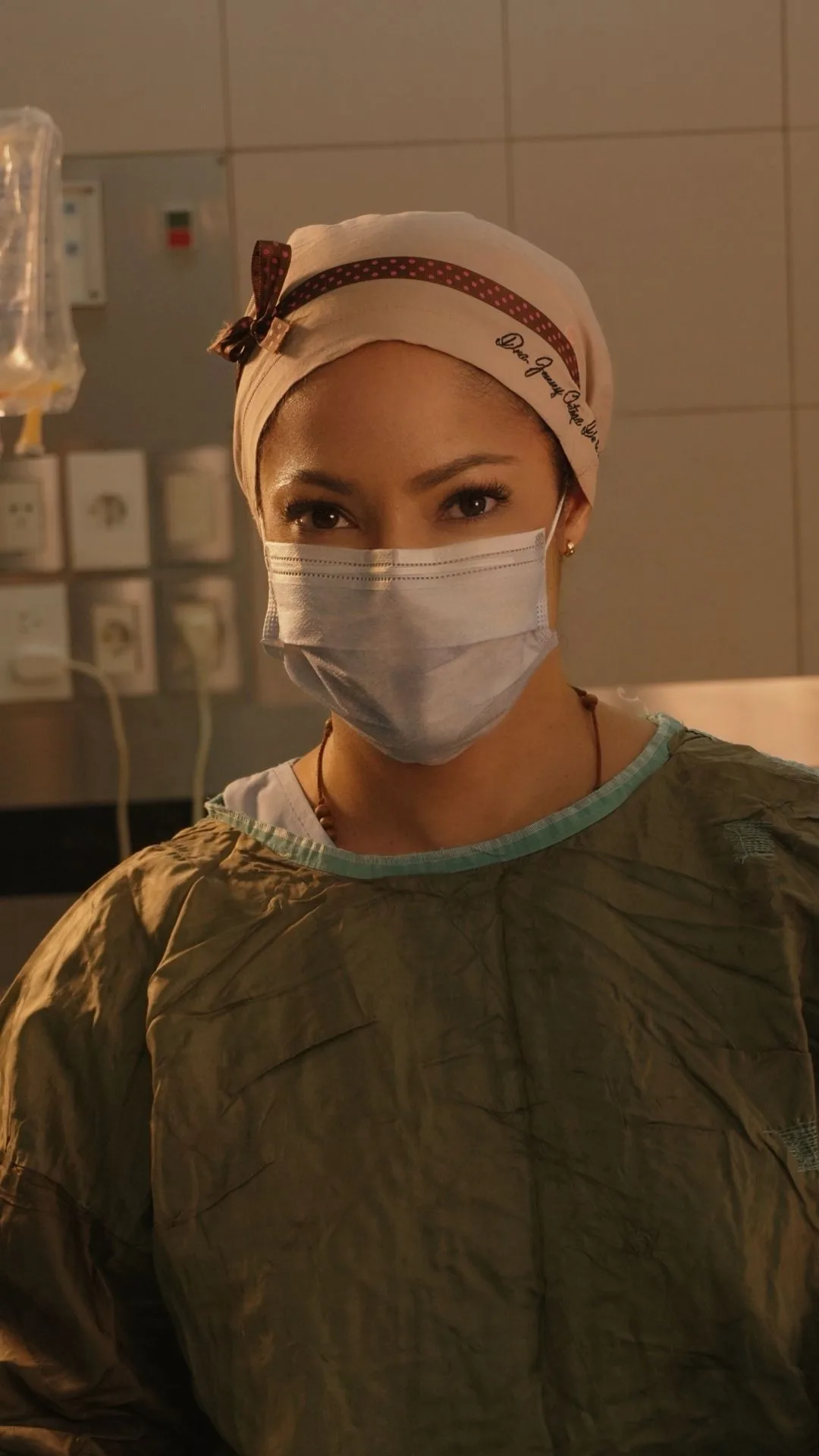
Dra. Jenny Ortega
De La Rosa
Specialist in Plastic and Reconstructive Surgery
I am a plastic surgeon with a practice focused on facial rejuvenation. My practice covers the whole spectrum of the face: from the Deep Plane Facelift and facial surgery (necklift, temporal lift, blepharoplasty, lip lift, rhinoplasty) to non-surgical treatments (hyaluronic acid, thread lifts, PRP and other injectables).
My criterion: a facelift is not a surgery about age, it is a surgery about laxity. That is why my first job is not to operate, but to assess honestly who is a candidate today — and who is not yet. Titular Member of the SCPBA — Buenos Aires Plastic Surgery Society · M.N. 146.616
Frequently asked
What people ask
before deciding.
Most patients return to desk work and light daily activities within 7–14 days. The first 48–72 hours involve tightness and mild to moderate discomfort, managed with oral medication. Sports and upper body exercise are restricted for 4–6 weeks. The final result — after the implants fully settle — is visible at 3–6 months.
Scar location and healing vary by technique and patient; they are discussed during assessment and follow-up.
Yes, in the vast majority of cases. The inframammary fold approach does not interfere with breast glandular tissue, milk ducts, or nipple sensitivity. Both subfascial and submuscular placement preserve breastfeeding capacity. We discuss your plans for future pregnancies at the consultation so that the surgical plan is designed accordingly.
No. Modern cohesive silicone gel implants (Motiva, Mentor, Allergan) do not have a mandatory replacement schedule. You are not obligated to change implants at 10 years. Replacement is only necessary if a complication occurs — such as rupture or capsular contracture — or if you choose to change size or profile. Implant durability is estimated by the manufacturer and assessed individually at each follow-up. Routine breast imaging (ultrasound or MRI) is recommended periodically to monitor implant integrity.
Dr. Jenny Ortega De La Rosa · Buenos Aires
If you have read this far,
the next step is to measure the breast base.
An assessment consultation: what applies in your case, what does not, and what can be expected from each option.
See results on @dra.jortegadelarosa
Not in Buenos Aires?
Your first consultation can be a video call
You do not need to travel to get started. Dr. Jenny Ortega De La Rosa sees patients from across Argentina and abroad by video consultation: initial assessment, second opinion or follow-up, with the same care as an in-person visit.
- ›From wherever you are — anywhere in Argentina or abroad.
- ›You pick the day — the real agenda, online.
- ›Same booking deposit — it does not cost more for being online.