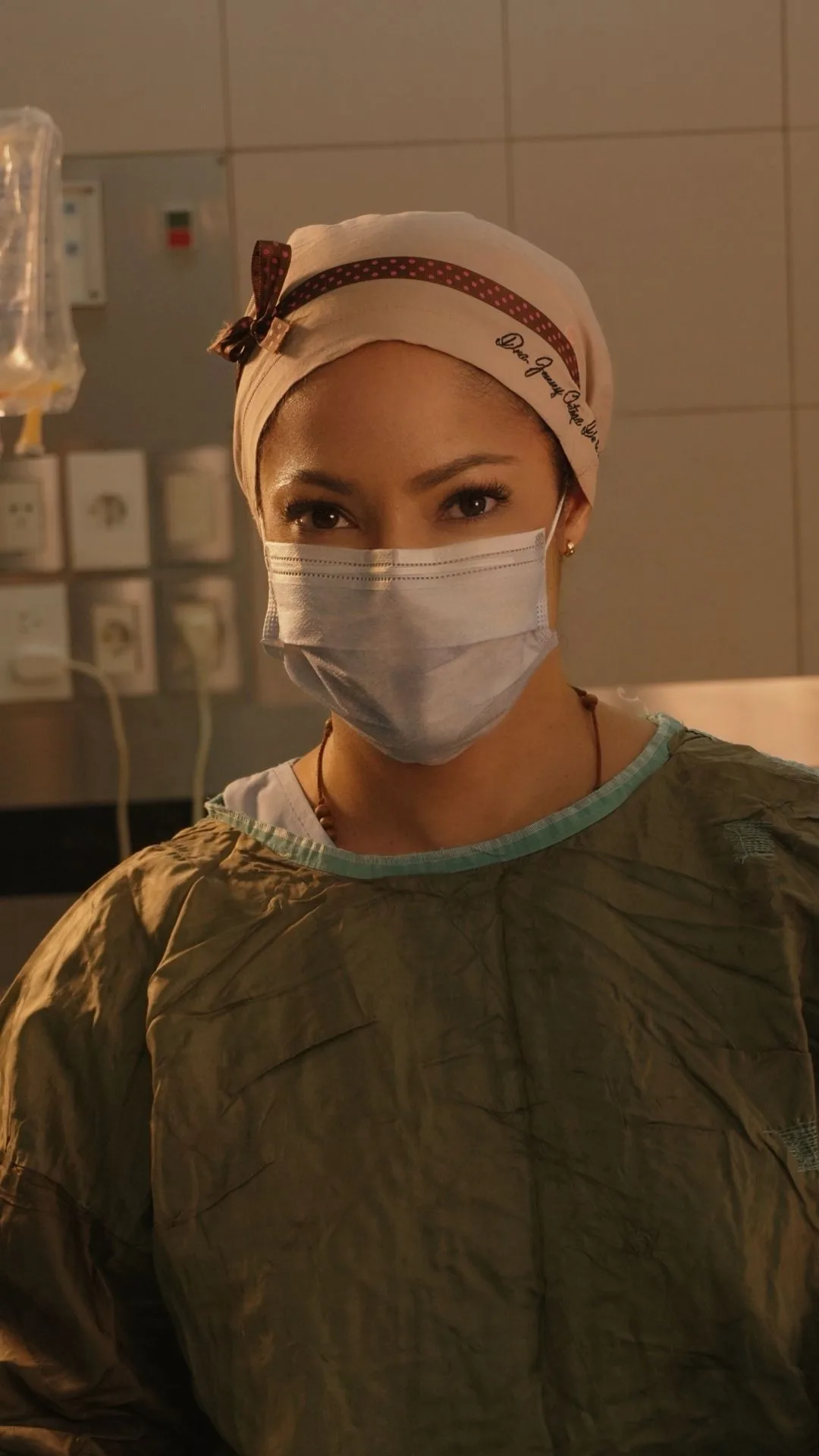
Facial surgery · Buenos Aires
Deep Plane Facelift
in Buenos Aires
The Deep Plane Facelift works on deep anatomical planes and may include the release of facial retaining ligaments and the repositioning of tissue. Its indication depends on each patient's anatomy and clinical assessment; results vary by patient and cannot be guaranteed.
Dr. Jenny Ortega De La Rosa Plastic SurgeonM.N. 146.616Titular Member of the SCPBA
Results vary by patient and cannot be guaranteed. The indication and scope of any procedure are defined only after an individual medical assessment.
- 4–6 hoursDuration
- GeneralAnaesthesia
- 10–15 daysPresentable
- 15 days in BARecommended stay
- 3–6 monthsFinal result
Timings are indicative. Every recovery is individual and is adjusted at each check-up.
It all starts with a consultation
At the consultation I assess your facial anatomy and tell you which technique applies — or whether none applies yet.
Every surgery begins with a personalised assessment consultation.The surgery
It does not pull the skin.
It repositions what holds it.
The Deep Plane Facelift addresses deep anatomical planes and may include the release of the facial retaining ligaments and the repositioning of tissue. Its indication depends on each patient's anatomy and on the clinical assessment.
The superficial musculoaponeurotic system — the SMAS — is the layer that carries the muscle and the deep fat of the face. Working beneath it, rather than on the skin, is what makes the difference in how the result sits and how long it lasts. Scar location and healing vary by technique and patient; they are discussed during the assessment and the follow-up.
The difference
Not every facelift
is the same operation
- Works on the skin and, at most, tightens the SMAS
- Traction is on the surface
- Shorter recovery
- Can leave a pulled look if over-tightened
- Releases the retaining ligaments and repositions the deep plane
- The tissue is moved, not stretched
- Recovery of 10 to 15 days to be presentable
- The aim is a face that reads as rested, not as operated
The generic term «facelift» covers very different techniques in terms of depth and of how the result sits. Which one applies depends on the anatomy of each patient, not on the name of the procedure.
Is it for you?
It is not a surgery about age.
It is a surgery about laxity.
The Deep Plane Facelift is indicated when the signs of facial ageing are evident enough for surgery to offer a significant benefit. Each case is assessed individually at the consultation.
Signs that surgery helps
- A descended middle thirdCheekbones without definition, cheeks that have fallen
- JowlsThe folds that descend from the corners of the mouth
- Marked nasolabial foldsThe crease between the nose and the corner of the mouth
- A lax neckPersistent even when the weight is maintained
Conditions for surgery
- Residual skin elasticitySurgery relocates tissue; it does not regenerate skin
- Good general healthNo contraindications for general anaesthesia
- Not smokingOr stopping before and after surgery
- Realistic expectationsRejuvenating your own features, not changing them
In 30 minutes I assess your case and tell you which technique applies — or whether none applies yet.
The procedure
A technically demanding surgery,
planned before the theatre.
The Deep Plane Facelift requires specific training in deep facial anatomy. The process begins at the consultation and the preoperative planning: assessment of facial anatomy, photographic analysis, review of medical history and the usual preoperative studies.
Surgery is performed under general anaesthesia in a certified operating theatre with a staff anaesthetist, and takes between 4 and 6 hours depending on the scope and on whether it is combined with other procedures.
Recovery
Slightly longer
than a superficial technique.
Recovery is manageable with the right preparation, and each patient is accompanied through the post-operative period.
Timings are indicative: recovery and discharge are defined at each check-up. Results vary by patient and cannot be guaranteed.
Medical criterion
Nothing is decided
from a screen.
The indication, scope and planning of any procedure are defined only after an individual medical assessment.
Send your photos on WhatsApp and, subject to availability, I will reply with a preliminary assessment for your case. The fee is defined at the assessment consultation.
Post-operative care
We don’t leave you alone
after surgery
The result of plastic surgery does not end in the operating room. Dr. Jenny De La Rosa accompanies her patients almost every day for the first 15 days after surgery.
Wound care, scar monitoring, assessment of progress and an immediate answer to any question. All of it to support good healing and to minimise risks, adjusting the check-ups to how each patient is healing.
Timings are indicative: recovery and discharge are defined at each check-up. Results vary by patient and cannot be guaranteed.
Dra. Jenny Ortega
De La Rosa
Specialist in Plastic and Reconstructive Surgery
I am a plastic surgeon with a practice focused on facial rejuvenation. My practice covers the whole spectrum of the face: from the Deep Plane Facelift and facial surgery (necklift, temporal lift, blepharoplasty, lip lift, rhinoplasty) to non-surgical treatments (hyaluronic acid, thread lifts, PRP and other injectables).
My criterion: a facelift is not a surgery about age, it is a surgery about laxity. That is why my first job is not to operate, but to assess honestly who is a candidate today — and who is not yet. Titular Member of the SCPBA — Buenos Aires Plastic Surgery Society · M.N. 146.616
Frequently asked
What people ask
before deciding.
Dr. Jenny Ortega De La Rosa is a plastic surgeon dedicated to facial rejuvenation in Buenos Aires. She covers the full spectrum of the face: from the Deep Plane Facelift and facial surgery (necklift, temporal fossa lift, blepharoplasty, lip lift, rhinoplasty) to non-surgical facial treatments (botulinum toxin, hyaluronic acid, thread lifts, PRP). The deep plane is her technique of choice for surgical facial rejuvenation. Member of the SCPBA · M.N. 146.616.
Deep plane facelift results have a duration that varies from patient to patient; deep-plane techniques tend toward longer-lasting results than superficial techniques. This is because the surgery repositions the deep structures of the face rather than simply pulling the skin. Aging continues naturally, but the improved starting point is maintained for much longer.
Initial recovery from a deep plane facelift takes between 3 and 4 weeks. During the first few days there is normal swelling and bruising. Between days 10 and 15, most patients are already presentable for everyday and social activities. The final result, with all swelling resolved, is visible at 4–6 months. For patients from abroad, a 15-day stay in Buenos Aires is required to complete the daily wound care and the post-op lymphatic drainage sessions.
Yes. Dr. Jenny's approach for a complete facial rejuvenation is to combine the Deep Plane Facelift with a necklift, temporal fossa lift, blepharoplasty and lip lift in a single surgery. This combination addresses all the signs of aging —the neck, the eyelids, the lip, the midface and the temporal area— in a single surgical procedure. The result is comprehensive, coherent and long-lasting. Doing it all together also optimizes recovery: a single post-operative period instead of several.
Yes, and that is precisely the most valued characteristic of this technique. Unlike superficial facelifts that produce a pulled or artificial look, the deep plane repositions the tissues to their original anatomical position. The result is a younger, more rested face, without visible tension in the skin or distortion of the features. People around you tend to notice that "you look great" without being able to pinpoint exactly what changed.
Yes. I welcome patients from across Latin America and around the world. We coordinate the pre-surgical consultation by video call and perform the surgery in Buenos Aires. Full recovery takes place here: the patient stays 15 days in the city, having their daily wound care at the clinic and the 10 manual lymphatic drainage sessions (billed separately). Usually by around day 15 the sutures are out and the patient can return home. The coordination team helps you with convenient accommodation and travel logistics.
The SMAS facelift works on the superficial musculoaponeurotic system but without fully releasing it from its retaining ligaments. The deep plane goes one step deeper: it releases those ligaments and repositions the tissue in a deeper anatomical plane, which allows the malar fat, the platysma and the soft tissues to be moved more completely. The deep plane result is more natural, longer-lasting and offers a more visible improvement in the midface and the neck.
There is no fixed age. The deep plane facelift is indicated when the signs of facial aging are evident and represent a concern for the patient. It is generally performed between the ages of 45 and 70, although there are valid candidates outside that range. What matters is the individual assessment: skin quality, volume loss, neck laxity and personal expectations. In the consultation we assess together whether it is the right time or whether there are more suitable options to try first.
Dr. Jenny Ortega De La Rosa · Buenos Aires
If you have read this far,
the next step is to look at your face.
An assessment consultation: what applies in your case, what does not, and what can be expected from each option.
See results on @dra.jortegadelarosa
Not in Buenos Aires?
Your first consultation can be a video call
You do not need to travel to get started. Dr. Jenny Ortega De La Rosa sees patients from across Argentina and abroad by video consultation: initial assessment, second opinion or follow-up, with the same care as an in-person visit.
- ›From wherever you are — anywhere in Argentina or abroad.
- ›You pick the day — the real agenda, online.
- ›Same booking deposit — it does not cost more for being online.