Nose surgery · Buenos Aires
Rhinoplasty
in Buenos Aires
Rhinoplasty changes the shape, the size and the structure of the nose. It can be aesthetic, functional — correcting breathing — or both in the same procedure. The technique and the scope are defined at an individual assessment consultation; results vary by patient and cannot be guaranteed.
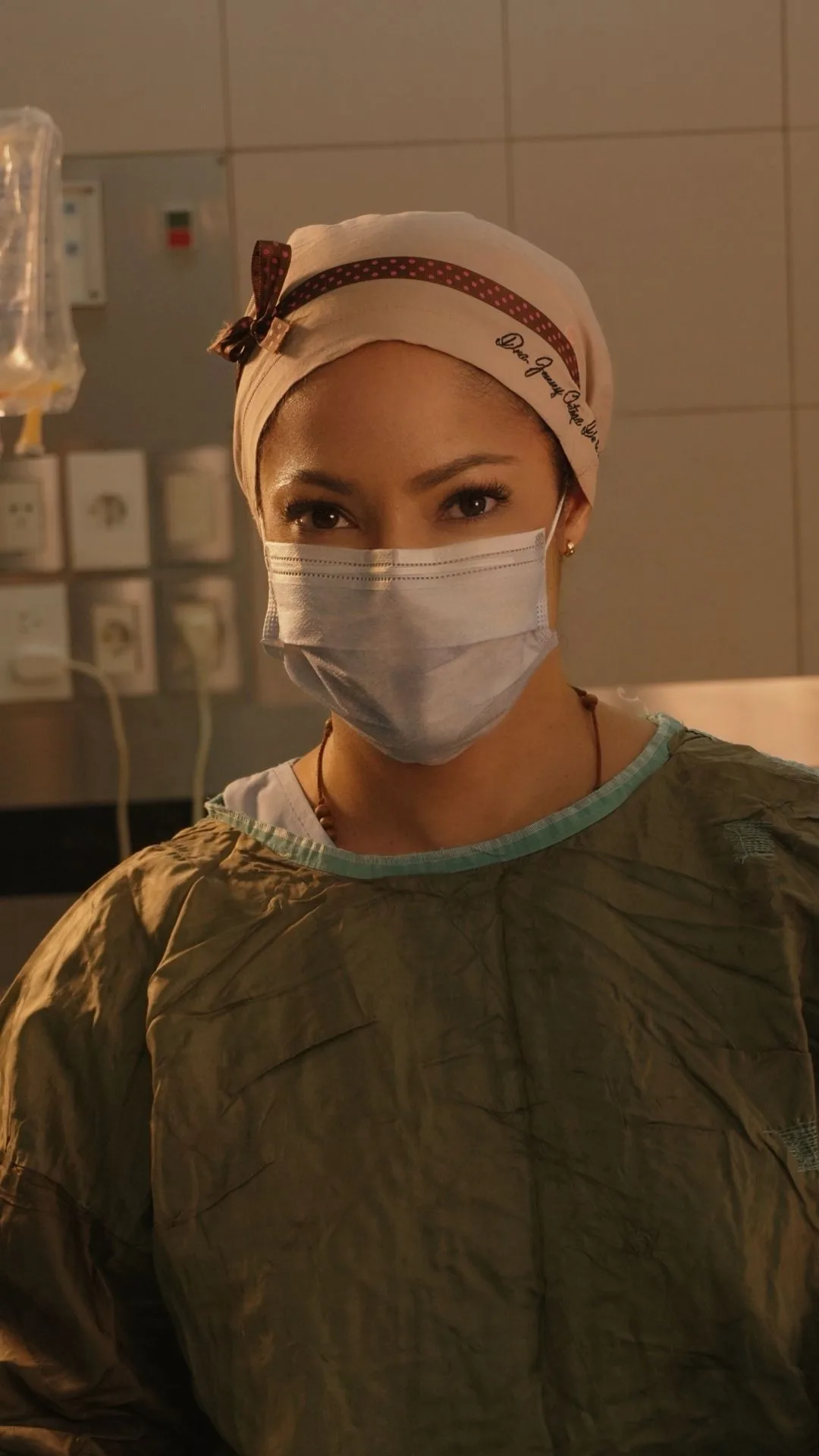
Dr. Jenny Ortega De La Rosa Plastic SurgeonM.N. 146.616Titular Member of the SCPBA
Results vary by patient and cannot be guaranteed. The indication and scope of any procedure are defined only after an individual medical assessment.
- 2–3 hoursDuration
- GeneralAnaesthesia
- 7–10 daysNasal cast
- 10–14 daysPresentable
- 6–12 monthsFinal result
Timings are indicative. Every recovery is individual and is adjusted at each check-up.
It all starts with a consultation
At the consultation we assess the nasal anatomy, the quality of the skin and — if there is difficulty breathing — the septum as well, to define which technique applies.
Every surgery begins with a personalised assessment consultation.The surgery
The nose is the geometric
centre of the face.
Rhinoplasty — also known as nose surgery — changes the shape, the size and the structure of the nose. It can be aesthetic (improving appearance), functional (correcting breathing problems caused by a deviated septum or valve collapse) or combined, both in the same procedure: septorhinoplasty.
It is a technically demanding surgery, because every millimetre of change reads across the whole face. That is why the planning — the photographic analysis from the front and profile, and the assessment of the nasal skin — weighs as much as the operating room.
Is it for you?
There is no upper age limit.
There is a lower one.
The criteria are complete nasal development — from the age of 18 —, good general health and realistic expectations. There is no upper age limit: what matters is the motivation, cardiovascular health and the quality of the nasal skin.
Common aesthetic reasons
- A dorsal humpThe profile shows a convexity the patient wishes to correct
- A wide, bulbous or drooping tipOut of proportion with the rest of the nose or the face
- A wide nasal baseAlae wide relative to the distance between the inner corners of the eyes
Functional reasons
- A deviated septumChronic nasal obstruction, snoring, mouth breathing
- Valve collapseDifficulty breathing in
- Recurrent sinusitisRelated to the deviation of the septum
- Complete nasal developmentFrom the age of 18
At the consultation I assess your nasal anatomy and tell you what applies — or whether nothing applies yet.
The procedure
Three valid techniques.
None superior to the others.
The choice is a medical decision that depends on the patient's anatomy and on the surgical goals. Each one has its precise indications.
Scar location and healing vary by technique and patient; they are discussed during the assessment and the follow-up.
Recovery
The cast is short.
The swelling is long.
It is longer than that of other facial surgeries, mainly because the nose keeps residual swelling for months. The period with the cast, by contrast, is short.
Timings are indicative: recovery and discharge are defined at each check-up. Results vary by patient and cannot be guaranteed.
Results
Changes to bone and cartilage
do not reverse.
The results are long-lasting: the nose keeps its new shape over time. The natural ageing of the face continues, but the structural changes made in the operating room are stable.
The first visible result appears when the cast comes off, between days 7 and 10, but the mature result takes 6 to 12 months to show fully, especially at the nasal tip.
Medical criterion
Nothing is decided
from a screen.
The indication, scope and planning of any procedure are defined only after an individual medical assessment.
Send your photos on WhatsApp and, subject to availability, I will reply with a preliminary assessment for your case. The fee is defined at the assessment consultation.
Post-operative care
We don’t leave you alone
after surgery
The result of plastic surgery does not end in the operating room. Dr. Jenny De La Rosa accompanies her patients almost every day for the first 15 days after surgery.
Wound care, scar monitoring, assessment of progress and an immediate answer to any question. All of it to support good healing and to minimise risks, adjusting the check-ups to how each patient is healing.
Timings are indicative: recovery and discharge are defined at each check-up. Results vary by patient and cannot be guaranteed.
Dra. Jenny Ortega
De La Rosa
Specialist in Plastic and Reconstructive Surgery
I am a plastic surgeon with a practice focused on facial rejuvenation. My practice covers the whole spectrum of the face: from the Deep Plane Facelift and facial surgery (necklift, temporal lift, blepharoplasty, lip lift, rhinoplasty) to non-surgical treatments (hyaluronic acid, thread lifts, PRP and other injectables).
My criterion: a facelift is not a surgery about age, it is a surgery about laxity. That is why my first job is not to operate, but to assess honestly who is a candidate today — and who is not yet. Titular Member of the SCPBA — Buenos Aires Plastic Surgery Society · M.N. 146.616
Frequently asked
What people ask
before deciding.
Recovery has two phases. The initial cast phase lasts 7 to 10 days; during that period activity is reduced but the patient is comfortable in their accommodation. At 10–14 days most people are already presentable for social activities. The final result, with all swelling resolved, is reached between 6 and 12 months. The nasal tip is the last to define its final shape, as it has the greatest skin thickness.
Yes. Rhinoplasty can be combined with blepharoplasty, Deep Plane Facelift and Lip Lift in the same surgery for comprehensive facial rejuvenation. Combined planning is evaluated case by case, considering total surgical time, anesthetic safety and patient goals. For those traveling from abroad, the combination allows taking advantage of a single 15-day stay in Buenos Aires to achieve multiple objectives.
In open rhinoplasty a small incision is made in the columella (the skin bridge between the nostrils), which allows lifting the skin and working with direct vision of all nasal structures. It is the preferred technique for complex cases. In closed rhinoplasty all incisions are internal (inside the nasal passages), with no visible external scar. It is ideal for minor corrections or when the nose already has a favorable anatomical base. The choice of technique depends exclusively on the anatomy and goals of each case.
At 10–14 days the change is already visible and noticeable after cast removal. However, the nose continues refining its shape during months: 70–80% of the final result is seen at 3 months, and the definitive result — with all fine residual swelling resolved — is reached between 6 and 12 months. The nasal tip, being the area of greatest skin thickness, is the last to define its final contour.
Many patients travel from the United States, Spain, Mexico, Brazil and other countries to have surgery in Buenos Aires. The process is: preoperative consultation by video call (before the trip), arrival in Buenos Aires 2–3 days before surgery for preoperative studies, surgery, wearing the cast for 7–10 days, cast removal at the office and return to the home country between days 14 and 15. We recommend Airbnb accommodation in Palermo or Recoleta, a few minutes from the office at Av. Santa Fe 3192. We coordinate all the logistics in advance to make the stay simple and comfortable.
Dr. Jenny Ortega De La Rosa · Buenos Aires
If you have read this far,
the next step is to look at your nose.
An assessment consultation: what applies in your case, what does not, and what can be expected from each option.
See results on @dra.jortegadelarosa
Not in Buenos Aires?
Your first consultation can be a video call
You do not need to travel to get started. Dr. Jenny Ortega De La Rosa sees patients from across Argentina and abroad by video consultation: initial assessment, second opinion or follow-up, with the same care as an in-person visit.
- ›From wherever you are — anywhere in Argentina or abroad.
- ›You pick the day — the real agenda, online.
- ›Same booking deposit — it does not cost more for being online.