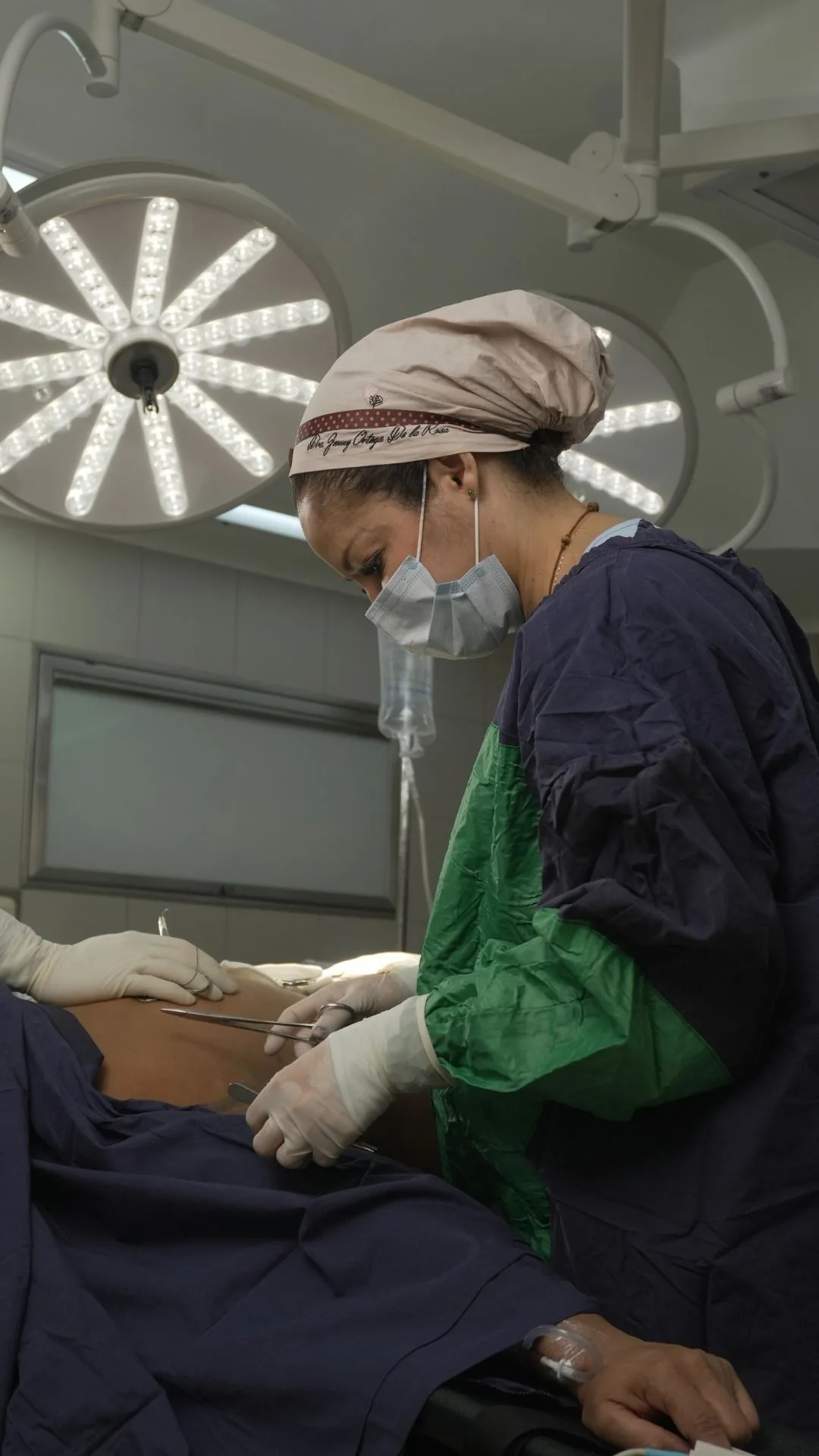
What is a tummy tuck?
A tummy tuck — formally called abdominoplasty or dermolipectomy — is the surgical procedure that removes excess skin and fat from the abdomen and tightens the abdominal wall muscles. It is an effective option for correcting the loose skin, stretched muscles, and persistent fat deposits that cannot be resolved with diet, exercise, or non-surgical treatments.
Pregnancy is the most common reason patients seek abdominoplasty. The combination of skin stretching, diastasis recti (separation of the rectus abdominis muscles), and fat accumulation in the lower abdomen creates changes that tend to persist without surgery. A full tummy tuck addresses all three components: it removes the excess skin, repairs the muscle diastasis, and removes lower abdominal fat — returning the abdomen to a flat, toned, and proportionate contour.
Weight loss patients — whether after bariatric surgery or lifestyle weight loss — also benefit greatly from abdominoplasty. When significant weight is lost, the skin often cannot retract to match the new body size, leaving an apron of loose tissue across the lower abdomen. Tummy tuck removes this excess skin, tightens the abdomen, and allows patients to finally see the results of their weight loss efforts.
In Buenos Aires, a tummy tuck with Renuvion® J-Plasma technology is performed with high-level surgical care by a board-certified surgeon, current technology, and structured post-operative follow-up. International patients typically stay 14–21 days, covering surgery and the initial recovery before returning home.
Renuvion® J-Plasma Technology
Subdermal Skin Tightening
According to published studies, Renuvion favors greater additional skin retraction (up to ~35–40%) compared to traditional abdominoplasty without the technology. This means the abdominal contour is tighter, smoother, and more defined — with less residual skin laxity in the areas treated. Renuvion does not require additional incisions: it is delivered through the same access created for abdominoplasty.
Who benefits most: Renuvion is particularly valuable in post-bariatric patients (where skin quality is severely compromised by years of stretching and rapid weight loss), post-partum patients (where skin has lost its elastic capacity), and patients with good fat reduction but persistent skin laxity that would not fully correct with excision alone. It is also highly effective for flank and hip tightening during the same procedure.
Safety: Renuvion J-Plasma is FDA-cleared for subdermal use in skin laxity correction. The technology has an excellent safety record when performed by trained plastic surgeons. Recovery time is not increased compared to standard abdominoplasty — there is no additional downtime from the Renuvion component.
Types of abdominoplasty
Not all tummy tucks are the same. The appropriate technique depends on the amount of excess skin, the location of the changes, and whether muscle repair is needed.
Full abdominoplasty
The standard procedure for patients with significant skin laxity involving both the upper and lower abdomen. A horizontal incision is made low on the abdomen, from hip to hip, below the bikini line. The abdominal skin is elevated, the muscles are repaired (diastasis correction), the lower abdominal skin is removed, and the upper skin is pulled down and re-draped. The navel is repositioned through a new opening. Renuvion is applied to the entire abdomen and flanks during this procedure to favor greater skin retraction.
Mini abdominoplasty
A less extensive procedure for patients with isolated lower abdominal skin laxity and minimal or no muscle diastasis. The incision is shorter, the navel is typically not repositioned, and recovery is faster. Renuvion can be applied to the lower abdomen to favor greater skin retraction with the shorter incision.
Extended abdominoplasty
Indicated for post-bariatric patients or those with skin excess extending beyond the abdomen to the flanks and outer thighs. The incision extends further around the hips to address these lateral areas. Combined with Renuvion for the treated areas and liposuction of the outer thighs and flanks.
Fleur-de-lis abdominoplasty
Used in massive weight loss patients with both vertical and horizontal skin excess — very common after bariatric surgery. Two incisions are used: a horizontal low incision plus a vertical midline incision. This allows removal of the maximum amount of excess skin in all directions.
Who is a candidate?
Abdominoplasty is indicated for patients who have persistent abdominal skin laxity, stretched muscles, or fat deposits that have not responded to lifestyle measures. Ideal candidates include:
- Women with loose abdominal skin and muscle diastasis after pregnancy and childbirth
- Patients who have lost significant weight (bariatric or lifestyle) and are left with an apron of excess lower abdominal skin
- Patients with persistent lower abdominal fat that does not respond to diet and exercise
- Patients who have had prior cesarean section and want to address the C-section scar alongside the tummy tuck
- Men with loose abdominal skin after weight loss
- Patients with good overall health and stable weight for at least 6 months
- Non-smokers or willing to stop smoking 4–6 weeks before and after surgery
- Patients who have completed their desired pregnancies (recommended, though not a strict contraindication)
Consult your case today
In 30 minutes we evaluate your abdominal anatomy and I explain which technique and whether Renuvion is right for your case.
Contact via WhatsAppStep-by-step procedure
Abdominoplasty with Renuvion is performed under general anesthesia and takes 3–4 hours depending on the extent of the procedure and whether liposuction is combined.
-
1Preoperative planning Abdominal examination, skin quality assessment, diastasis evaluation, fat mapping, and review of any prior surgical scars (C-section, laparoscopy). We define technique, whether liposuction is included, and the planned application of Renuvion to specific areas. Preoperative lab work and anesthesia clearance are coordinated.
-
2Incision and skin elevation A low horizontal incision is made across the lower abdomen, below the bikini line. The abdominal skin is elevated off the underlying muscles from the incision line up to the ribs. The navel is preserved on its stalk.
-
3Muscle repair (diastasis correction) The rectus abdominis muscles are identified. If diastasis recti is present — the midline gap between the muscles caused by pregnancy — it is corrected by suturing the muscles back together in the midline. This repair flattens the abdomen and restores the waistline. It is one of the most impactful steps of the procedure.
-
4Renuvion® J-Plasma application Before final skin closure, the Renuvion probe is inserted subdermally and applied to the abdominal and flank skin. The helium plasma causes immediate visible contraction of the subdermal tissue. Areas of residual skin laxity — typically the upper abdomen and flanks — are treated to favor greater skin retraction. This step adds approximately 15–20 minutes to the procedure.
-
5Skin re-draping and closure The elevated skin is pulled down, the excess is excised, and the skin is re-draped over the tightened abdomen. The navel is repositioned through a new opening in the skin. Drains are placed to manage fluid accumulation during healing. The incision is closed in multiple layers with absorbable internal sutures.
-
6Recovery room and one-night stay The patient spends one night in the surgical facility under nursing supervision. Compression garment is applied immediately. Pain management is initiated. The following morning, discharge is coordinated with wound care and drain management instructions.
Recovery
Abdominoplasty has a more demanding recovery than breast procedures due to the abdominal muscle repair and the size of the surgical area. Most patients describe the recovery as very manageable with proper preparation and support. Here is what to expect:
- Days 1–3: most demanding. Rest in a slightly flexed position to reduce tension on the incision. Drainage tubes in place. Pain managed with oral and IV medication. Walking short distances encouraged from day 1 to prevent clot formation.
- Days 3–7: drains typically removed by day 3–5. Significant improvement in comfort. Showering permitted once drains are out. Mobility increases progressively. Surgical garment worn continuously.
- Week 2: most patients are comfortable at home, managing daily activities. Upright posture resumes progressively as abdominal tension decreases. Driving when comfortable and off pain medication.
- Weeks 3–4: return to desk work and light activities. Swelling continues to reduce. Compression garment worn daily for 6 weeks total.
- Weeks 6–8: full return to exercise including core work. Abdominal tightness progressively resolves. Final scar assessment begins.
- 6–12 months: final result visible as the last of the swelling resolves and the Renuvion skin retraction fully develops. Maximum tightening from the Renuvion component is achieved over 3–6 months post-operatively.
Results
Abdominoplasty with Renuvion produces a flatter, tighter, and more contoured abdomen than a traditional tummy tuck alone, according to studies. Many patients note results that would have required more extensive skin excision with the traditional approach.
The combination of muscle repair, skin excision, and Renuvion subdermal retraction addresses abdominal laxity at three distinct levels simultaneously:
- Structural level: diastasis recti corrected, waistline restored
- Skin surface level: excess skin removed, lower abdominal apron eliminated
- Subdermal level: Renuvion favors greater retraction of remaining skin (up to ~35–40% according to studies), improving tightness throughout the abdominal field
Results are long-lasting. The skin removed and muscles repaired do not regress. Maintaining a stable weight helps preserve the result over the long term. Future pregnancies would re-stretch the muscles and skin — patients who plan future pregnancies are advised to delay abdominoplasty until their family is complete.
Cost + FAQ
The fee for abdominoplasty with Renuvion® J-Plasma with Dra. Jenny Ortega De La Rosa in Buenos Aires is defined during the valuation consultation. Buenos Aires offers high-level surgical care by a board-certified surgeon, with current technology and structured post-operative follow-up.
- Dra. Jenny's surgical fees
- General anesthesia
- Renuvion® J-Plasma technology included
- One-night hospital stay
- Operating room and surgical supplies
- Compression garment included
- Drainage tube management and post-op wound care
- Preoperative consultations and all follow-up appointments
Book your valuation consultation
Send your photos and medical history via WhatsApp and we will arrange a personalized evaluation for your case.
Book a consultation on WhatsAppFrequently Asked Questions about Tummy Tuck
Renuvion J-Plasma is an FDA-cleared subdermal skin tightening technology that combines helium plasma with radiofrequency energy. Applied beneath the skin during abdominoplasty, it causes immediate collagen fiber contraction — producing up to 35–40% more skin retraction than traditional abdominoplasty alone. It does not add recovery time and is particularly valuable in post-bariatric and post-partum patients where skin quality is reduced. It is included as a standard component of every abdominoplasty at my practice because, according to studies, it favors a more refined final result.
The first week is the most demanding — rest, drain care, and limited mobility. Most patients return to desk work and light activities by week 2–3. Exercise and heavy lifting are restricted for 6–8 weeks. The compression garment is worn for 6 weeks. The final result — including maximum skin retraction from the Renuvion component — is visible at 6–12 months.
Yes. Liposuction is frequently combined with abdominoplasty to address flanks, hips, and outer thighs in the same surgery. This combination provides a more complete body contouring result in a single recovery. Renuvion is then applied to the liposuctioned areas as well to favor greater skin retraction throughout the treated region. We plan the combination at the preoperative consultation.
The abdominoplasty incision is placed low on the abdomen — at or below the bikini line — hidden by underwear and swimwear. The scar extends horizontally across the lower abdomen. After 12–18 months of healing and proper scar care, it is typically a thin, pale, flat line that is hidden by almost any undergarment or bikini bottom. For many patients, the scar trade-off is considered worthwhile given the improvement in abdominal contour.
The fee is defined during the in-person valuation consultation with Dr. Jenny, based on each patient's needs. As a personalized medical service, we do not publish prices — everything is arranged during the initial consultation.
Ready to assess your abdomen?
Book your consultation today. We assess your case with no commitment and I explain what tummy tuck + Renuvion may offer for your particular anatomy.
Book consultation via WhatsAppSee results at @dra.jortegadelarosa