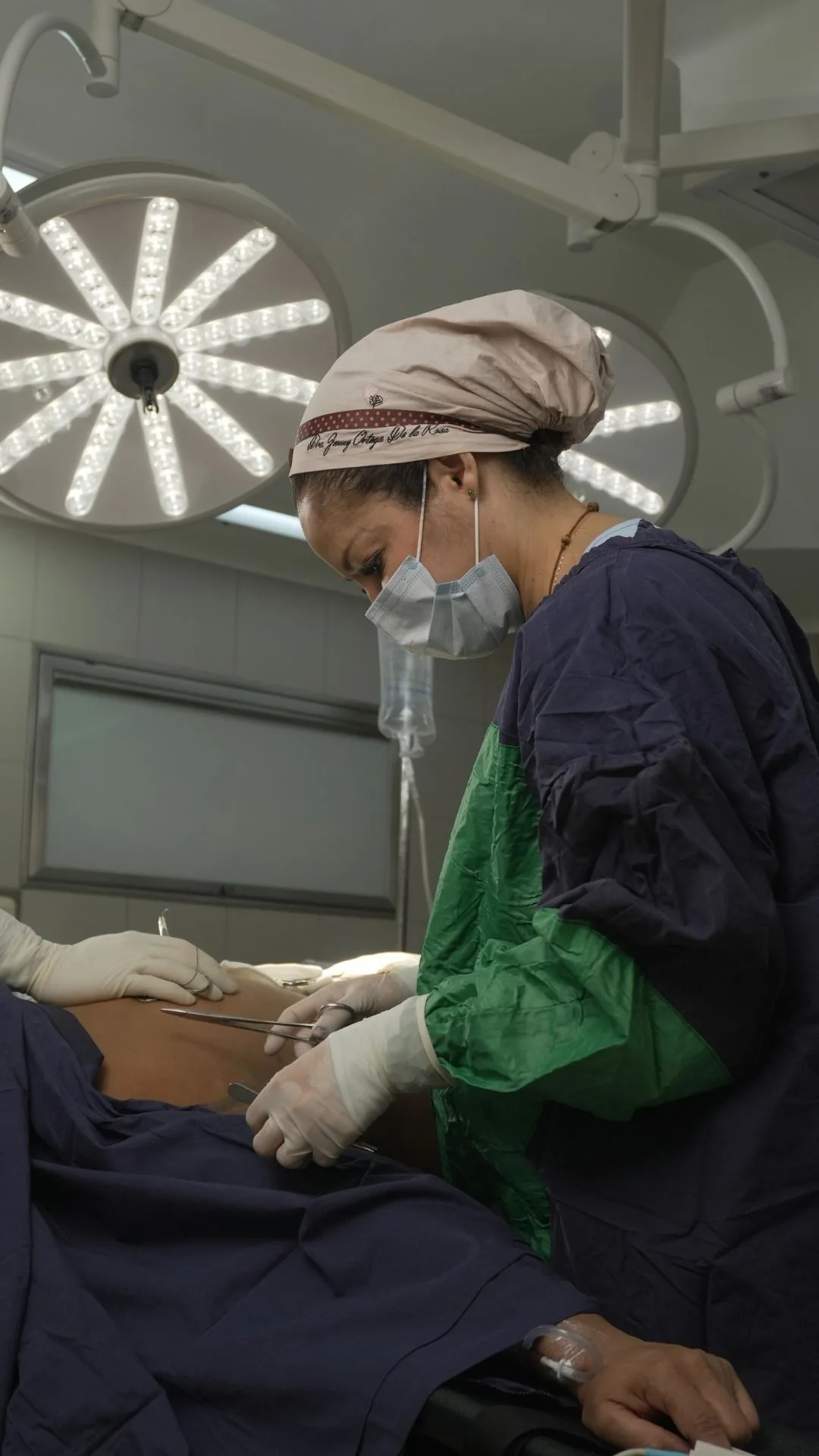
What is mastopexy?
Mastopexy — commonly known as a breast lift — is the surgical procedure that elevates and reshapes ptotic (sagging) breasts by removing excess skin and repositioning the nipple-areola complex to a higher, more youthful position on the breast mound. Unlike breast augmentation, mastopexy does not primarily change breast volume — it addresses the shape, position, and firmness of the breast. When volume loss accompanies sagging, the two procedures can be combined in a single operation called augmentation-mastopexy.
Breast ptosis is one of the most common complaints among women after pregnancy, breastfeeding, and significant weight loss. Gravity, stretching of the Cooper's ligaments, and skin laxity cause the breast to lose its original projection and position. The nipple descends below the inframammary fold. The breast becomes elongated and flat rather than projected and full. Mastopexy reverses these changes surgically, producing a breast that sits higher, with better projection, a smaller and repositioned areola, and a more youthful overall contour.
A breast lift addresses position and shape — where the breast sits on the chest wall and how it is shaped. Breast augmentation addresses volume — how large the breast is. Many patients need both: the lift reshapes the sagging breast, and the implant restores the volume lost after pregnancy or weight loss. This combination is called augmentation-mastopexy.
Techniques
Mastopexy technique is selected based on the degree of ptosis (how far the nipple has descended relative to the fold) and the amount of excess skin to be removed. There are three main incision patterns, each suited to a different severity of ptosis:
Periareolar (donut) mastopexy
Indicated for Grade 1 ptosis — mild sagging where the nipple is at or just below the fold. A single circular incision is made around the areola edge. This approach produces minimal scarring (a single periareolar scar that follows the areola edge, fading significantly by 12–18 months) and can also reduce areola diameter simultaneously. It is the least invasive technique but is only suitable for mild degrees of ptosis.
Vertical (lollipop) mastopexy
Indicated for Grade 2 ptosis — moderate sagging where the nipple has descended below the fold by 1–3 cm. Two incisions are used: one around the areola and one vertical line from the areola edge down to the inframammary fold. The resulting scar pattern resembles a lollipop. This is the most commonly performed technique, offering significant reshaping capacity with a moderate scar burden. The vertical component allows reshaping of the lower pole of the breast.
Anchor (inverted-T) mastopexy
Indicated for Grade 3 ptosis — severe sagging where the nipple is 3 or more centimeters below the fold, or where there is a very large amount of excess skin. Three incisions are used: periareolar + vertical + a horizontal incision in the inframammary fold. This technique provides the most reshaping capacity and is required when the degree of sagging is significant. The scars are more extensive but remain hidden within the bra and swimwear.
Who is a candidate?
Mastopexy is indicated for women whose breasts have changed position, shape, or firmness in a way that causes concern — whether aesthetic, functional, or both. Common presentations include:
- Breasts that have descended after pregnancy and breastfeeding, with the nipple pointing downward
- Significant volume loss post-breastfeeding accompanied by excess skin and flattening
- Breast ptosis following major weight loss (bariatric patients or after lifestyle weight loss)
- Age-related ptosis with skin laxity and loss of breast projection
- Asymmetric ptosis (one breast significantly more ptotic than the other)
- Patients who feel their bra size is adequate but wish to restore breast shape and position
- Patients who want a mommy makeover combining breast lift with tummy tuck and liposuction
Ideal candidates are in good general health, are non-smokers (or willing to stop smoking 4–6 weeks before surgery), and have stable weight. Patients planning future pregnancies should be counselled that pregnancy may affect the long-term result.
Consult your case today
In 30 minutes we evaluate your breast anatomy, ptosis grade, and I explain which technique and combination is right for you.
Contact via WhatsAppWith or without implants
The decision of whether to combine mastopexy with breast augmentation depends on whether the patient's primary concern is position (the breast has descended), volume (the breast has deflated), or both. This is one of the most important decisions in breast surgery planning:
Mastopexy alone (without implants)
The appropriate choice when the patient is satisfied with her breast volume but wants to elevate the position and reshape the breast. The surgery removes excess skin, tightens the breast envelope, and repositions the nipple-areola complex. The resulting breast is firmer and higher-positioned with no increase in volume. This is often preferred by patients with a naturally full breast who have experienced ptosis from aging or after nursing.
Augmentation-mastopexy (with implants)
The combination procedure is ideal for patients who have experienced both volume loss and ptosis — the most common presentation after pregnancy and breastfeeding. The implant restores the volume, and the mastopexy lifts the envelope and repositions the nipple. Performing them simultaneously avoids two separate recovery periods and achieves a more complete result in a single surgery.
However, augmentation-mastopexy is technically more demanding than either procedure alone. Adding volume while simultaneously tightening the skin requires careful planning to avoid complications. At the consultation, I evaluate whether simultaneous or staged surgery (lift first, implants after full healing) is the safest approach for your specific anatomy and degree of ptosis.
Just as with breast augmentation alone, the implants placed during augmentation-mastopexy take 3–6 months to fully settle into their final position. The upper pole softens, the lower pole gains natural fullness, and the breast takes on its final shape. Final assessment photographs are taken at 6 months post-surgery.
Recovery
Recovery from mastopexy is comparable to that of breast augmentation. The first 3–5 days involve the most discomfort — tightness, swelling, and sensitivity in the breast tissue and around the incisions. This is very manageable with oral medication. Here is what to expect week by week:
- Days 1–5: rest at home, surgical bra worn continuously. Limited arm movement above shoulder height. Swelling and mild bruising around the incisions. Discomfort is greatest at this stage.
- Days 5–10: visible improvement. External sutures (if any) removed. Showering normally permitted. Most patients feel comfortable at home and can manage daily activities at low intensity.
- Weeks 2–3: return to desk work and light activities. Driving resumes when comfortable. Surgical bra or supportive sports bra worn continuously.
- Weeks 4–6: return to moderate exercise. Avoid impact activities and heavy lifting above shoulder height until week 6.
- 3–6 months: final result visible as scars mature and tissues settle into their final position. Drop and fluff process complete in augmentation-mastopexy cases.
Results
Mastopexy produces a breast that is visibly higher on the chest wall, with better projection, a more proportionate areola, and a firmer envelope. The improvement in breast position is significant and immediately apparent. The result tends to be durable because structural changes are made to the breast tissue itself — not just the skin.
Scars are an inherent part of mastopexy. The technique used (periareolar, lollipop, or anchor) determines the scar pattern. All scars fade progressively over 12–18 months. At full maturity — typically 18–24 months post-surgery — the scars are typically pale, flat, and concealed within underwear and swimwear. Most patients consider the scar trade-off well worth the improvement in breast position and shape.
The longevity of mastopexy results depends on age, skin quality, breast volume, and lifestyle factors, and varies with each individual assessment. Pregnancy and breastfeeding after surgery can affect longevity. Maintaining a stable weight helps preserve the result longer. Patients who choose implants at the same time may require a touch-up mastopexy sooner, as implant weight contributes to stretching over time.
Cost of breast lift in Buenos Aires
The fee for mastopexy with Dra. Jenny Ortega De La Rosa depends on the degree of ptosis, the technique required (periareolar, lollipop, or anchor), and whether implants are included. When combined with a tummy tuck as part of a mommy makeover, the procedures may be planned together within a single surgical and recovery period. As a personalized medical service, we do not publish prices — everything is arranged during the initial consultation.
- Dra. Jenny's surgical fees
- General anesthesia
- Operating room and surgical supplies
- Preoperative consultations and post-op follow-up appointments
- Surgical bra included
- Post-op wound care at the clinic during recovery
In Buenos Aires, mastopexy is performed in an accredited operating room with personalized postoperative follow-up at every stage. International patients typically stay 10–14 days to cover surgery and the initial recovery period.
Book your valuation consultation
Send your photos via WhatsApp and we will arrange a personalized evaluation for your anatomy and goals.
Book a consultation on WhatsAppFrequently Asked Questions about Breast Lift
Recovery from mastopexy takes approximately 10–14 days before returning to desk work and light daily activities. The first 3–5 days involve the most discomfort — tightness and swelling — managed with oral medication. Exercise and heavy lifting are restricted for 4–6 weeks. The final result, with scars matured and tissues settled, is visible at 3–6 months.
Mastopexy involves more scarring than breast augmentation alone because excess skin must be removed. The periareolar scar follows the edge of the areola; the lollipop technique adds a vertical line to the fold; the anchor technique adds a horizontal scar in the fold. All scars fade progressively over 12–18 months. At full maturity, they are typically pale, flat, and concealed within underwear and swimwear. Scar care protocol is provided post-operatively.
Yes. Augmentation-mastopexy combines a breast lift with implant placement in a single surgery — ideal for patients with both volume loss and sagging, the most common scenario after pregnancy and breastfeeding. We assess at the consultation whether simultaneous or staged surgery is the safest approach for your anatomy and degree of ptosis.
Mastopexy preserves the nipple-areola complex on a vascularized tissue pedicle, maintaining connection to the milk ducts in most cases. Breastfeeding is typically possible after a breast lift. However, patients planning future pregnancies should be aware that pregnancy and breastfeeding can affect the long-term result of the lift.
The fee is defined during the in-person valuation consultation with Dr. Jenny, based on each patient's needs. As a personalized medical service, we do not publish prices — everything is arranged during the initial consultation.
Ready to take the next step?
Book your consultation today. We assess your breast anatomy with no commitment and I explain exactly what we can achieve together.
Book consultation via WhatsAppSee results at @dra.jortegadelarosa