Aesthetic medicine · Buenos Aires
Carboxytherapy
in Buenos Aires
Subcutaneous injection of medical CO₂ in controlled doses, for under-eye circles, laxity, cellulite and localised fat. It is a course-based treatment: the indication and the number of sessions are defined at an individual assessment consultation. Results vary by patient and cannot be guaranteed.
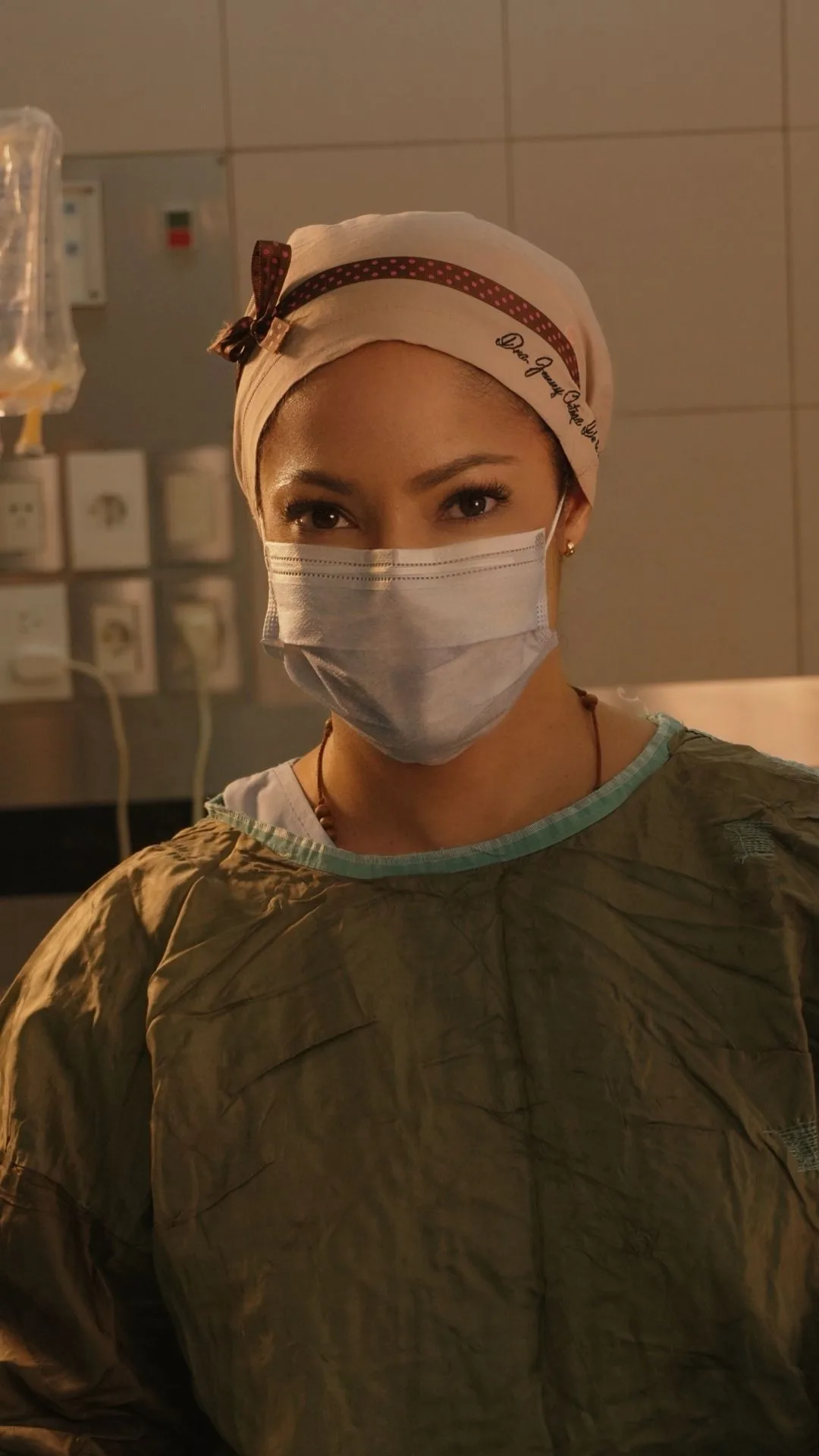
Dr. Jenny Ortega De La Rosa Plastic SurgeonM.N. 146.616Titular Member of the SCPBA
Results vary by patient and cannot be guaranteed. The indication and scope of any procedure are defined only after an individual medical assessment.
- 20–40 minSession duration
- Medical CO₂Substance
- Not requiredAnaesthesia
- 8–12Sessions per course
- ProgressiveResult
Timings are indicative. The number of sessions and the frequency are defined at the consultation and vary with the indication and each patient's response.
It all starts with a consultation
Carboxytherapy is prescribed as a course and for specific problems. Which one applies in your case, and how many sessions, is defined by looking at the area.
Every treatment begins with a personalised assessment consultation.The treatment
A gas the body
already knows how to metabolise.
Carboxytherapy consists of the subcutaneous or intradermal injection of medical carbon dioxide in controlled doses. As it diffuses under the skin, the gas triggers physiological responses that improve local circulation and stimulate cell renewal.
It is a treatment of medical origin, first developed in French thermal centres, and works on concrete physiological mechanisms — vasodilation and lipolysis — rather than on the surface of the skin.
How it works
Three mechanisms,
and none of them is a mystery.
All of them are known physiology: what the treatment does is trigger them locally and in a controlled way.
How far each mechanism goes depends on the area, the indication and the individual response, and is assessed at the check-ups during the course.
Is it for you?
It works for specific things.
Not for everything.
It is indicated on the face and on the body, but for different problems and at different speeds. Which one applies is defined at the assessment.
On the face
- Vascular under-eye circlesImproves periocular microcirculation; works on the violet tone and the swelling of circulatory origin
- Facial laxityStimulates collagen and elastin in the cheeks, jaw and neck
- Texture and radianceThrough cell oxygenation, on dullness and overall texture
- Superficial scarsVascular regeneration accompanies the maturing of the scar
On the body
- CelluliteOn microcirculation and the orange-peel look on thighs, buttocks and abdomen
- Localised fatThrough the lipolytic effect, on the flanks and abdomen
- Stretch marksAccompanying the regeneration of the tissue
At the consultation I assess the area and tell you whether carboxytherapy applies, how many sessions and what to expect from them.
The session
Between 20 and 40 minutes.
No anaesthesia, minimal recovery.
It requires no special prior preparation and no recovery time afterwards.
It is mildly uncomfortable rather than painful, and requires no anaesthesia. Tolerance is usually good from the first session.
The results
It is a course,
not a session.
The usual protocol is 8 to 12 sessions, twice a week. Results are progressive and build up over the course.
Timings are indicative and vary with the indication and each patient's response. Results cannot be guaranteed.
The judgement
A course-based treatment
requires saying how many.
Dr. Jenny Ortega De La Rosa is a Specialist in Plastic and Reconstructive Surgery, Titular Member of the SCPBA — Buenos Aires Plastic Surgery Society, M.N. 146.616.
Carboxytherapy is prescribed as a course, and that requires being clear from the start: how many sessions, how often and what to expect from each stage. Starting a course without that conversation is the usual way to end up disappointed with a treatment that may not have been the right one.
Medical criterion
Nothing is decided
from a screen.
The indication, scope and planning of any procedure are defined only after an individual medical assessment.
Send your photos on WhatsApp and, subject to availability, I will reply with a preliminary assessment for your case. The fee is defined at the assessment consultation.
Dra. Jenny Ortega
De La Rosa
Specialist in Plastic and Reconstructive Surgery
I am a plastic surgeon with a practice focused on facial rejuvenation. My practice covers the whole spectrum of the face: from the Deep Plane Facelift and facial surgery (necklift, temporal lift, blepharoplasty, lip lift, rhinoplasty) to non-surgical treatments (hyaluronic acid, thread lifts, PRP and other injectables).
My criterion: a facelift is not a surgery about age, it is a surgery about laxity. That is why my first job is not to operate, but to assess honestly who is a candidate today — and who is not yet. Titular Member of the SCPBA — Buenos Aires Plastic Surgery Society · M.N. 146.616
Frequently asked
What people ask
before deciding.
Carboxytherapy is mildly uncomfortable but not painful. You feel a momentary sensation of pressure or warmth in the treated area as the CO₂ disperses under the skin. This sensation disappears within seconds. No anesthesia is required. Tolerance is high and most patients continue without difficulty from the very first session.
The standard protocol is 8 to 12 sessions, performed twice a week. First results begin to appear from the fourth or fifth session. For maintenance, one monthly session is recommended once the initial cycle is complete. The exact frequency is adjusted according to the indication and the individual response of each patient.
Carboxytherapy shows especially good results for vascular dark circles, superficial and moderate cellulite, localized fat on flanks and thighs, and firming sagging skin. In the facial area it also improves overall skin luminosity and texture. It is less effective for deep fibrous cellulite and very pronounced static wrinkles.
Yes. Carboxytherapy combines very well with radiofrequency, body mesotherapy and lymphatic drainage to enhance results for body indications. In the facial area it can be combined with hyaluronic acid, PRP and chemical peels. Dr. Jenny evaluates each case individually to design the most appropriate and safe protocol.
Dr. Jenny Ortega De La Rosa · Buenos Aires
If you have read this far,
the step that remains is knowing how many sessions, and what for.
An assessment consultation: what applies in your case, what does not, and what can be expected from each option.
See results on @dra.jortegadelarosa
Not in Buenos Aires?
Your first consultation can be a video call
You do not need to travel to get started. Dr. Jenny Ortega De La Rosa sees patients from across Argentina and abroad by video consultation: initial assessment, second opinion or follow-up, with the same care as an in-person visit.
- ›From wherever you are — anywhere in Argentina or abroad.
- ›You pick the day — the real agenda, online.
- ›Same booking deposit — it does not cost more for being online.