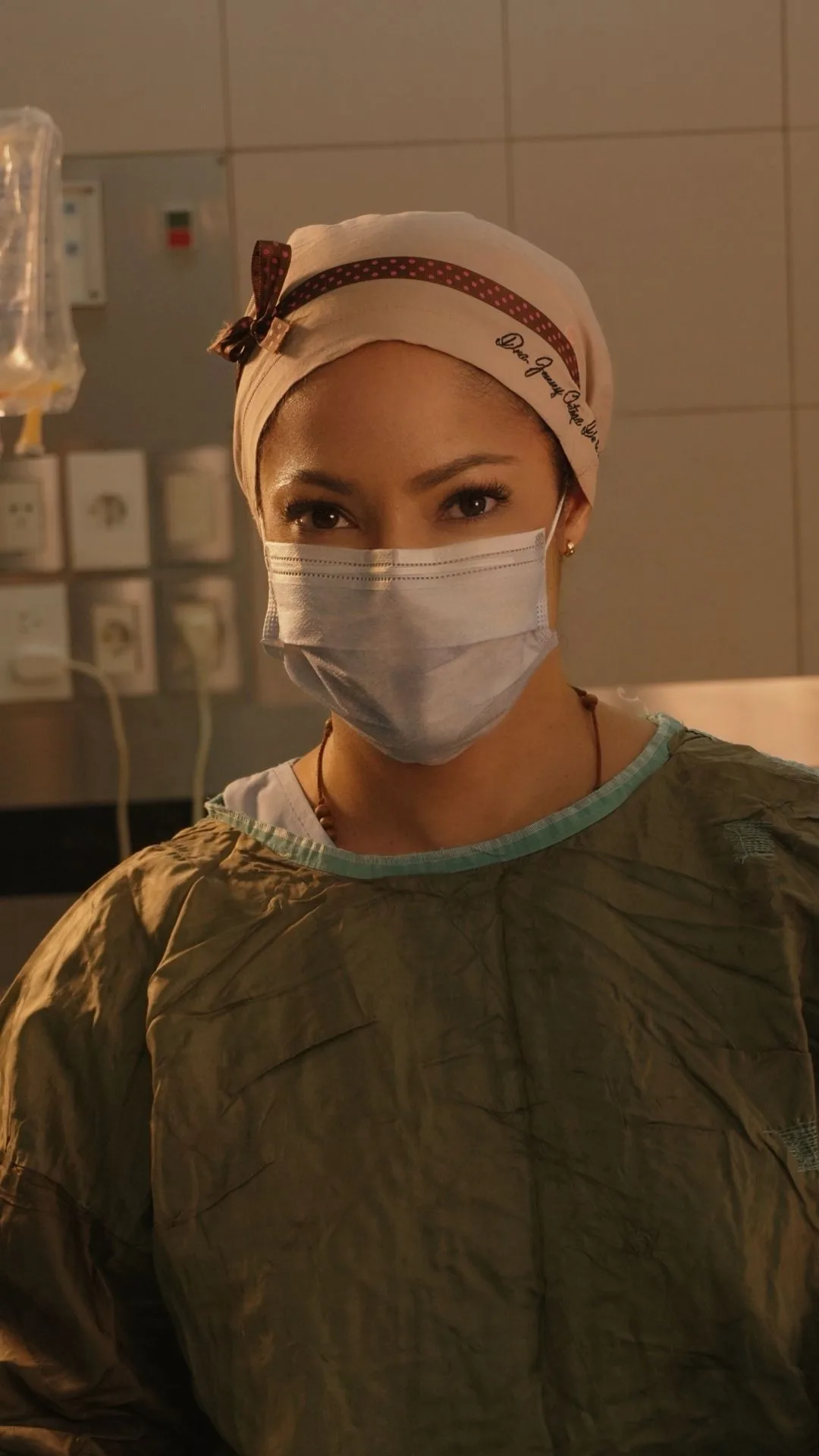
Facial aesthetic medicine · Buenos Aires
Thread lift
in Buenos Aires
Absorbable threads that lift descended tissue and stimulate collagen, with no incisions and no hospital admission. The indication and the type of thread are defined at an individual assessment consultation; results vary by patient and cannot be guaranteed.
Dr. Jenny Ortega De La Rosa Plastic SurgeonM.N. 146.616Titular Member of the SCPBA
Results vary by patient and cannot be guaranteed. The indication and scope of any procedure are defined only after an individual medical assessment.
- 30–60 minSession duration
- LocalAnaesthesia
- Not requiredHospital admission
- 2–5 daysRecovery
- VariableDuration of the effect
Timings are indicative. The type of thread, the areas and the duration of the effect are defined at the consultation and vary by patient.
It all starts with a consultation
The degree of laxity determines whether threads apply — or whether something else does.
Every treatment begins with a personalised assessment consultation.The treatment
They lift today.
And stimulate collagen afterwards.
Thread lifts use absorbable medical devices — made of polydioxanone (PDO), poly-L-lactic acid (PLLA) or polycaprolactone (PCL) — inserted into the subcutaneous tissue to lift descended tissue and stimulate collagen production.
They work through two mechanisms acting on different timelines. The mechanical effect is immediate: threads with barbs or cones grip the tissue and reposition it during the session. The biological effect is progressive: the thread acts as a scaffold and new collagen forms around it over the following weeks, remaining even after the thread has been absorbed.
The materials
There is no better thread.
There is one that applies.
Each material is absorbed at a different rate and has its own profile of action. Which one applies depends on each patient's anatomy and goals.
The products used are certified by ANMAT. The duration of the effect varies with the material and by patient, and is discussed at the assessment consultation.
Is it for you?
The criterion is not age.
It is how much laxity there is.
Threads are indicated for mild to moderate descent. The most common age range is 35 to 55, but what defines the indication is the degree of laxity, not the number.
Common reasons
- Mild to moderate laxityIn the cheeks, neck or facial contour
- Loss of jawline definitionThe facial oval that blurs over time
- Descent of malar volumeRepositioning it without resorting to fillers
- A dropped brow tailLifting it to open up the gaze, without surgery
And also
- No recovery timeVisible results with 2 to 5 days of mild discomfort
- Maintenance between surgeriesOr as a complement to a previous facelift
- Realistic expectationsThreads reposition and tighten; they do not remove skin
At the consultation I assess the degree of laxity and tell you whether threads apply — or whether something else does.
The session
At the practice.
Under local anaesthesia.
Between 30 and 60 minutes depending on the areas treated.
Afterwards: tightness or a pulling sensation when making expressions, mild swelling and, in some cases, small bruises that resolve within 3 to 7 days.
The aftercare
For the first two weeks
the tissue is still settling.
Most people go back to their daily routine the same day or the next. The result depends in large part on following this aftercare while the new collagen settles.
Some slight irregularity of the skin may be noticeable in the first 24 to 72 hours, which settles as the swelling goes down. Results vary by patient and cannot be guaranteed.
The judgement
Someone who operates the deep plane
knows how far a thread can go.
Dr. Jenny Ortega De La Rosa is a Specialist in Plastic and Reconstructive Surgery, Titular Member of the SCPBA — Buenos Aires Plastic Surgery Society, M.N. 146.616.
Threads do not compete with the other treatments: they complement them. Hyaluronic acid restores volume but does not lift structures; botulinum toxin works on expression lines but not on laxity; surgery acts on the deep planes. Knowing what each one solves is what makes it possible to indicate with judgement — and to say when nothing applies yet.
Medical criterion
Nothing is decided
from a screen.
The indication, scope and planning of any procedure are defined only after an individual medical assessment.
Send your photos on WhatsApp and, subject to availability, I will reply with a preliminary assessment for your case. The fee is defined at the assessment consultation.
Dra. Jenny Ortega
De La Rosa
Specialist in Plastic and Reconstructive Surgery
I am a plastic surgeon with a practice focused on facial rejuvenation. My practice covers the whole spectrum of the face: from the Deep Plane Facelift and facial surgery (necklift, temporal lift, blepharoplasty, lip lift, rhinoplasty) to non-surgical treatments (hyaluronic acid, thread lifts, PRP and other injectables).
My criterion: a facelift is not a surgery about age, it is a surgery about laxity. That is why my first job is not to operate, but to assess honestly who is a candidate today — and who is not yet. Titular Member of the SCPBA — Buenos Aires Plastic Surgery Society · M.N. 146.616
Frequently asked
What people ask
before deciding.
The duration of the effect varies for each patient and is assessed at the consultation. The threads biodegrade gradually, while the collagen stimulation prolongs the result. Many patients schedule a periodic touch-up to maintain results. Results are individual and depend on skin quality, lifestyle, and the areas treated.
The procedure is performed under local anesthesia and is well tolerated. Most patients report a mild pinching sensation during the local anesthetic injection, after which the procedure is comfortable. Post-procedure, mild soreness, tightness, and some swelling are normal for 3–5 days and resolve without treatment.
A thread lift is a minimally invasive procedure that repositions soft tissue without excising skin. It produces a more subtle improvement than a surgical facelift and is best suited for mild to moderate laxity in younger patients. A Deep Plane Facelift addresses deeper tissue planes, removes excess skin, and produces more pronounced, longer-lasting results whose duration varies for each patient. For patients with significant laxity, a thread lift is not a replacement for surgery: the assessment consultation determines which option is appropriate in each case.
Dr. Jenny Ortega De La Rosa · Buenos Aires
If you have read this far,
the step that remains is having someone look at your face.
An assessment consultation: what applies in your case, what does not, and what can be expected from each option.
See results on @dra.jortegadelarosa
Not in Buenos Aires?
Your first consultation can be a video call
You do not need to travel to get started. Dr. Jenny Ortega De La Rosa sees patients from across Argentina and abroad by video consultation: initial assessment, second opinion or follow-up, with the same care as an in-person visit.
- ›From wherever you are — anywhere in Argentina or abroad.
- ›You pick the day — the real agenda, online.
- ›Same booking deposit — it does not cost more for being online.